
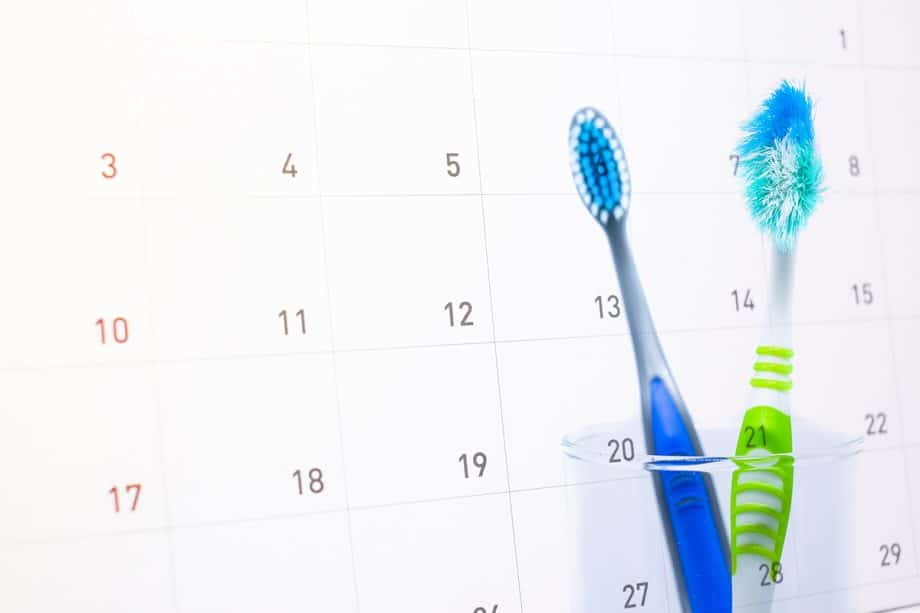
We see many patients who put real effort into brushing twice a day, flossing more often, and keeping up with dental visits. Yet one small detail often gets missed: replacing the toothbrush itself. A worn-out toothbrush cannot clean teeth and gums as well as a fresh one, and that can affect plaque control, gum health, and overall oral hygiene.
Most people do not need a new toothbrush every few weeks, but they should not keep the same one for a year either. We want to clear up the confusion. In this article, we explain how often to change your toothbrush, what can shorten its lifespan, and how proper toothbrush care supports better results from your daily routine and your ongoing general dentistry care.
Why the Three-Month Rule Matters
Dentists and oral health organizations commonly recommend replacing a manual toothbrush, or the brush head on an electric toothbrush, about every three to four months. That advice is not arbitrary. Over time, bristles fray, bend, and lose the stiffness they need to remove plaque along the gumline and from the tooth surface.
A toothbrush may still look usable from a distance, but close inspection often tells a different story. Once bristles spread outward or lose their shape, the brush becomes less effective. We may also see people brush harder with an old toothbrush because it no longer feels like it cleans well, and that can irritate the gums instead of helping them.
What Happens as Bristles Wear Down
Soft bristles work best when they keep their shape. As they break down, they do a poorer job of reaching tight spaces and sweeping away debris. A worn brush may leave more plaque behind, especially near the gumline where gingivitis often starts.
A Quick Rule We Share With Patients
We recommend replacing your toothbrush or brush head:
- Every 3 to 4 months
- Sooner if the bristles look frayed
- Sooner after an illness in some cases
- Sooner if a child chews on the brush or damages it
That schedule fits most people, but not every toothbrush wears at the same rate. Your brushing style, the amount of pressure you use, and how you store the brush all play a role.
Signs You Should Replace Your Toothbrush Sooner
The three-month mark is a solid guide, but some people need to replace their toothbrush earlier. We often find that heavy-handed brushers wear out bristles much faster than they realize. If you scrub aggressively, your brush may stop working well long before three months pass.
Children also tend to need more frequent replacements. Young kids may bite the brush head, mash the bristles, or drop the toothbrush on bathroom surfaces. Those habits can damage the brush quickly and make it less sanitary and less effective.
Common Signs It Is Time for a New Toothbrush
Watch for these clues:
- Bristles that flare outward
- Bent, flattened, or missing bristles
- A brush head that looks uneven
- Discoloration or residue that does not rinse away
- A toothbrush that smells odd even after drying
- Signs that a child has chewed the handle or head
You should also pay attention to comfort. If brushing starts to feel rough or inconsistent, the toothbrush may have worn down. A fresh toothbrush should feel soft, controlled, and even across your teeth and gums.
What About After Being Sick?
Many people throw out their toothbrush after a cold, flu, strep throat, or another illness. That can be a reasonable step, especially if it gives peace of mind. In some cases, replacing the brush after you recover helps you restart with a clean brush and avoid lingering contamination concerns. We generally view it as a practical habit, though regular drying and proper storage also matter.
How to Make Your Toothbrush Work Better and Last Appropriately
A toothbrush does not need special products or complicated care, but it does need proper handling. Good storage and brushing technique help the brush stay cleaner and maintain its shape until replacement time. They also help protect your mouth.
We encourage patients to rinse the toothbrush thoroughly after each use and store it upright so it can air-dry. A constantly damp brush stored in a closed container may stay wet longer than it should. Moisture alone does not mean the brush is unsafe, but air flow helps keep it cleaner between uses.
Best Practices for Toothbrush Care
Use these simple steps:
- Rinse the brush well after brushing
- Store it upright when possible
- Let it air-dry between uses
- Avoid sharing toothbrushes
- Keep it from touching other brush heads if possible
- Replace it every 3 to 4 months or sooner if worn
Brushing Technique Matters Too
If your toothbrush looks crushed after only a few weeks, brushing pressure may be the problem. We want the bristles to glide along the teeth and gumline, not scrub forcefully. Gentle pressure with a soft-bristled toothbrush usually removes plaque well without causing extra wear to the brush or irritation to the gums.
Electric toothbrush users should follow the same replacement timeline for brush heads unless the manufacturer gives a shorter interval. The same wear signs apply. Once the bristles spread or lose shape, the brush head needs replacement.
A Small Habit That Supports Better Oral Health
Changing your toothbrush on time may seem minor, but small habits shape long-term dental health. A fresh toothbrush helps remove plaque more effectively, supports healthier gums, and makes your home care routine count for more. When we combine consistent brushing, daily flossing, and regular dental visits, we give ourselves a much better chance of preventing cavities and gum disease.
If you are unsure whether your toothbrush, brushing method, or daily routine still serves you well, we can help you review it at your next visit. Good oral care starts at home, and the tools we use each day matter more than many people think.
Frequently Asked Questions About General Dentistry
How often should we replace a toothbrush in general dentistry?
We recommend replacing a manual toothbrush or electric brush head about every three to four months. We also suggest replacing it sooner if the bristles fray, bend, or wear down before then.
Why does general dentistry place so much emphasis on toothbrush condition?
General dentistry focuses on preventing problems as well as treating them. A worn toothbrush does not remove plaque as effectively, so it can make it harder to protect teeth and gums from cavities, gingivitis, and other common issues.
Can a toothbrush that looks fine still need replacement?
Yes. Some toothbrushes lose effectiveness before the wear seems obvious at first glance. If the bristles no longer feel even, soft, and springy, the toothbrush may not clean as well as it should.
Do electric toothbrush heads need replacement as often as manual toothbrushes?
Yes. Most electric toothbrush heads should also be replaced about every three to four months, or sooner if the bristles spread out. The motor may still work well, but the brush head does the cleaning.
When should we ask a dentist about our brushing routine?
We should ask during routine exams if we notice frequent gum irritation, plaque buildup, bad breath, or fast toothbrush wear. A dentist can check brushing technique, recommend the right toothbrush, and suggest ways to improve home care.
At Oak Road Dentistry, we help patients and families in Snellville build strong daily habits that support lasting oral health. We provide practical, patient-focused care and guidance for every stage of life. To learn more or schedule a visit, contact us.